 TheFitnessPlate
What Does Research Say About Plate Proportions?
An overview of scientific studies examining macronutrient distribution and plate composition recommendations.
Understanding the Research Foundation
Scientific literature examining plate composition draws from decades of nutritional research exploring how different macronutrient ratios influence physiological responses, nutrient absorption, and metabolic processes. This research provides the conceptual foundation for various plate proportion models used in nutritional education.
Different governmental and organizational bodies have examined research to develop general recommendations. These perspectives, while varying in specific proportions, converge on several key principles regarding balanced nutrient distribution.
Macronutrient Distribution Principles
Research examining healthy eating patterns explores several macronutrient distribution ranges:
- Carbohydrate sources comprise a variable portion of plate composition, typically ranging from 40-60% of total energy depending on individual factors and research perspective. The emphasis in current literature focuses on carbohydrate quality and source rather than quantity alone.
- Protein proportions in research-examined plates typically represent 15-30% of energy intake. Studies explore how protein quantity and quality influence satiation, muscle protein synthesis pathways, and nutrient absorption mechanisms.
- Dietary fats in scientific literature on balanced nutrition typically represent 20-35% of total energy. Different fat types show distinct physiological effects based on saturation and composition.
The Role of Plate Visualization
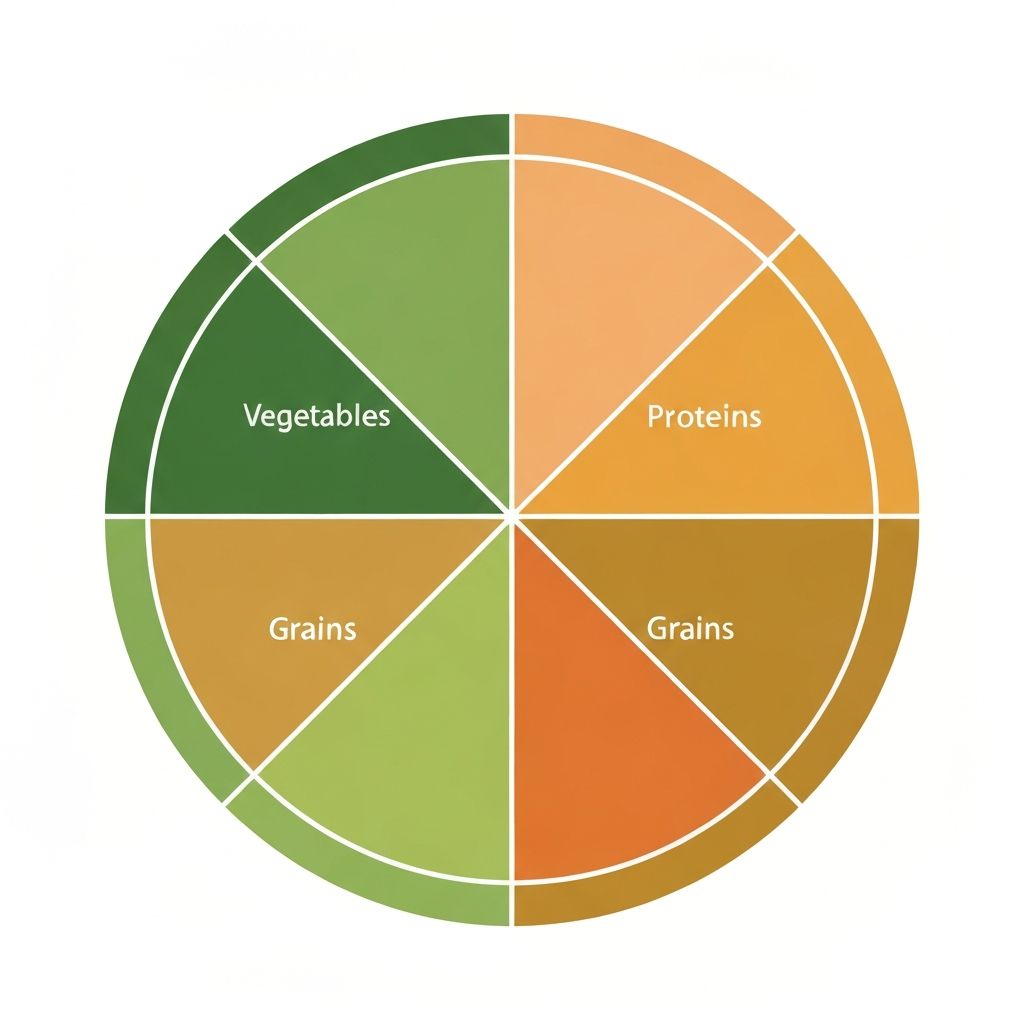
Scientific research has examined the effectiveness of visual plate models as educational tools for understanding nutrient distribution. Studies suggest that visual representations help individuals conceptualize diverse food combinations and appropriate portions of different food groups.
The visual approach translates nutrient ratios into practical meal-building guidance by showing proportional representation of food categories rather than abstract percentages. This translation into visual and practical terms has demonstrated utility in nutritional education contexts.
Vegetable Emphasis in Research
A consistent finding across nutritional research is the emphasis on vegetable-rich portions of meals. Scientific literature documents that emphasizing vegetables on a plate contributes to:
- Increased micronutrient density and phytonutrient intake
- Enhanced satiety through fiber and volume contributions
- Improved nutrient-to-calorie ratios
- Support for metabolic and digestive processes
Whole Grains and Carbohydrate Quality
Research comparing whole grains to refined grains reveals distinct physiological responses. Scientific evidence indicates that whole grain consumption is associated with different glycemic responses, satiety patterns, and micronutrient availability compared to refined carbohydrate sources.
This research supports the inclusion of whole grains as a component of balanced plate composition, particularly regarding sustained energy availability and fiber contribution.
Protein Quality and Diversity
Scientific examination of protein sources reveals that both animal and plant-based proteins can contribute to adequate amino acid intake. Research explores how protein source diversity, complete amino acid profiles, and accompanying nutrients influence overall nutritional value.
The concept of balanced plate composition encourages protein source variety, drawing on research demonstrating the distinct nutrient profiles of different protein categories.
Individual Variability in Research
An important finding in nutritional science is the recognition of individual variability in responses to different macronutrient distributions. While research provides general principles, factors including genetics, activity level, age, and health status influence optimal individual nutritional approaches.
Plate composition models represent general educational frameworks rather than individually optimized prescriptions for every person.
Satiety and Meal Satisfaction
Research examining satiety mechanisms reveals that multiple factors influence feelings of fullness and meal satisfaction. These factors include fiber content, protein presence, meal volume, eating rate, and psychological factors related to food enjoyment.
Balanced plate composition attempts to incorporate multiple satiety-supporting elements through varied food group inclusion and proportioning.
Educational Context: This article presents an informational overview of how nutritional science approaches plate composition. This is not personalized nutritional advice. Individual nutritional needs vary significantly based on health status, activity level, age, and personal factors. Consult with qualified nutrition professionals for personalized guidance.